Fast, Free Quotes
Any Job Size
Next-Day Installation
Multiple Screeds One Visit
Pre installation Preparation Guidance
Floor Preparation
Before screed installation, the building should be weather-tight. Ideally the roof should be complete, with all external doors and windows installed. If this is not possible, all openings must be sealed and made weatherproof using polythene or another suitable protective material to prevent water ingress and drafts.
The floor must be clean and properly prepared before screeding. Remove all dust, debris and loose material to ensure the floor area is suitable for the installation of liquid screed.
Edge Expansion Strip
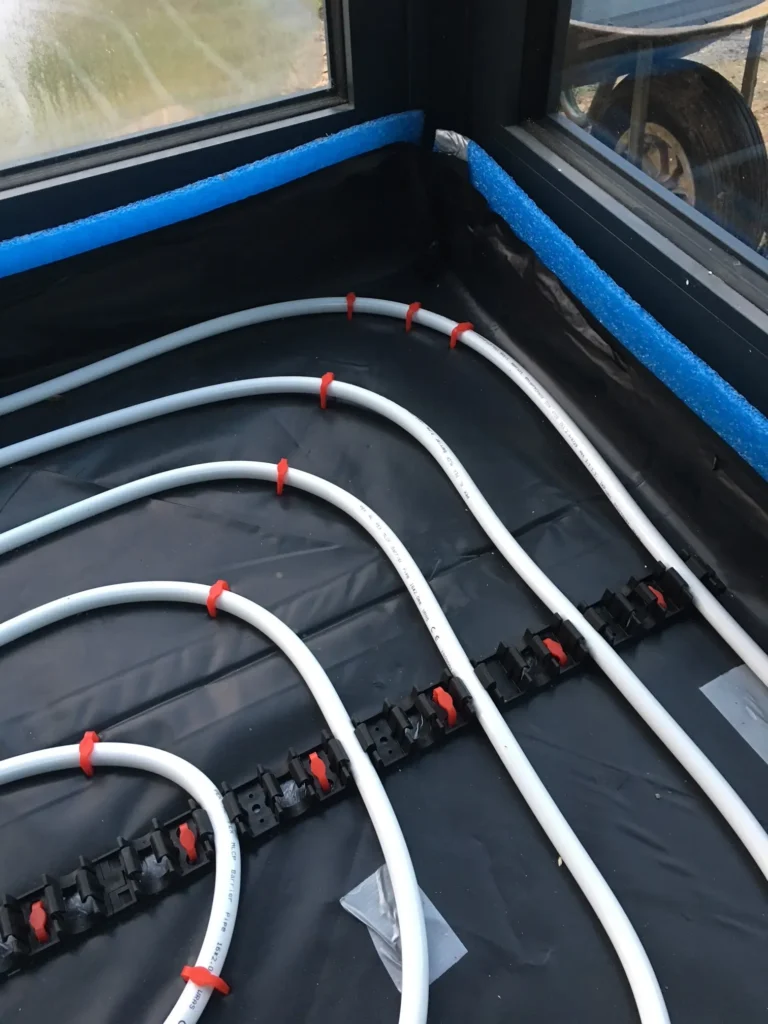
Perimeter isolation upstands must be installed to all abutments, including walls and structural elements, as part of correct liquid screed preparation.
We recommend either:
- 20 mm extruded polystyrene insulation boards to reduce cold bridging, or
- A proprietary 8 mm expansion strip, installed to the full depth of the screed
Correct perimeter isolation is essential to allow for movement and to ensure the long-term performance of the screed.
Installing the Polythene Membrane
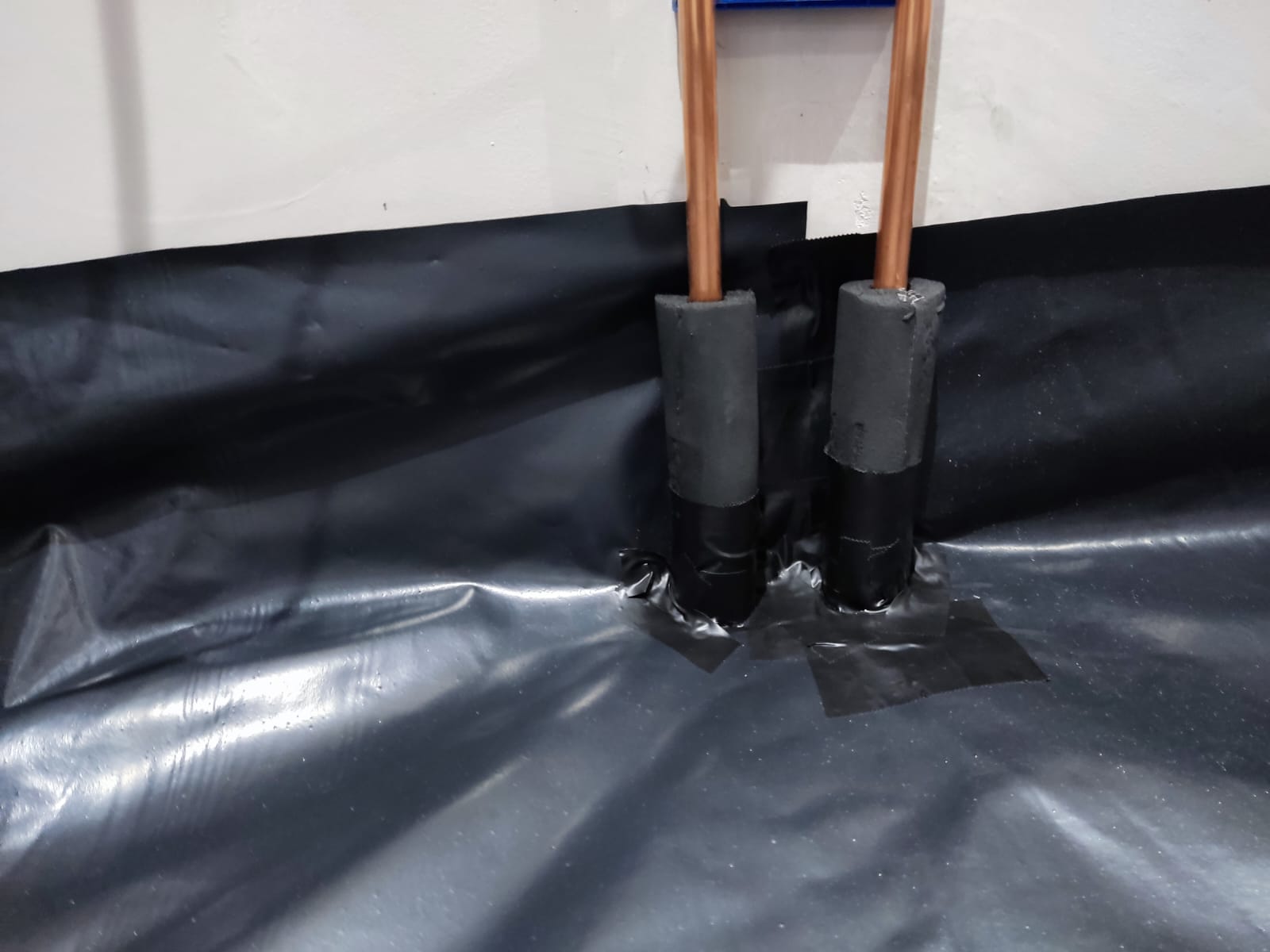
All liquid screeds require a 500 gauge (125 MU) polythene separating membrane as part of correct liquid screed preparation.
Temporary Protective sheeting (TPS) membranes are not suitable.
Important: Screedflo liquid screed reacts with aluminium.
Aluminium-backed products must not be used.
The polythene membrane must be laid:
- Free from punctures, tears, or creases
- With joints lapped a minimum of 100 mm
- Extended up all abutments to finish slightly above the final screed depth
All joints and abutments must be fully sealed using waterproof gaffa tape (not aluminium-backed tape) to create a 100% watertight area.
Care must be taken to remove:
- Air pockets
- Voids beneath the membrane
- Weak points at corners and abutments
All exposed edges, including door openings and level changes, must be provided with temporary formwork to prevent leakage during screed installation.
Underfloor Heating
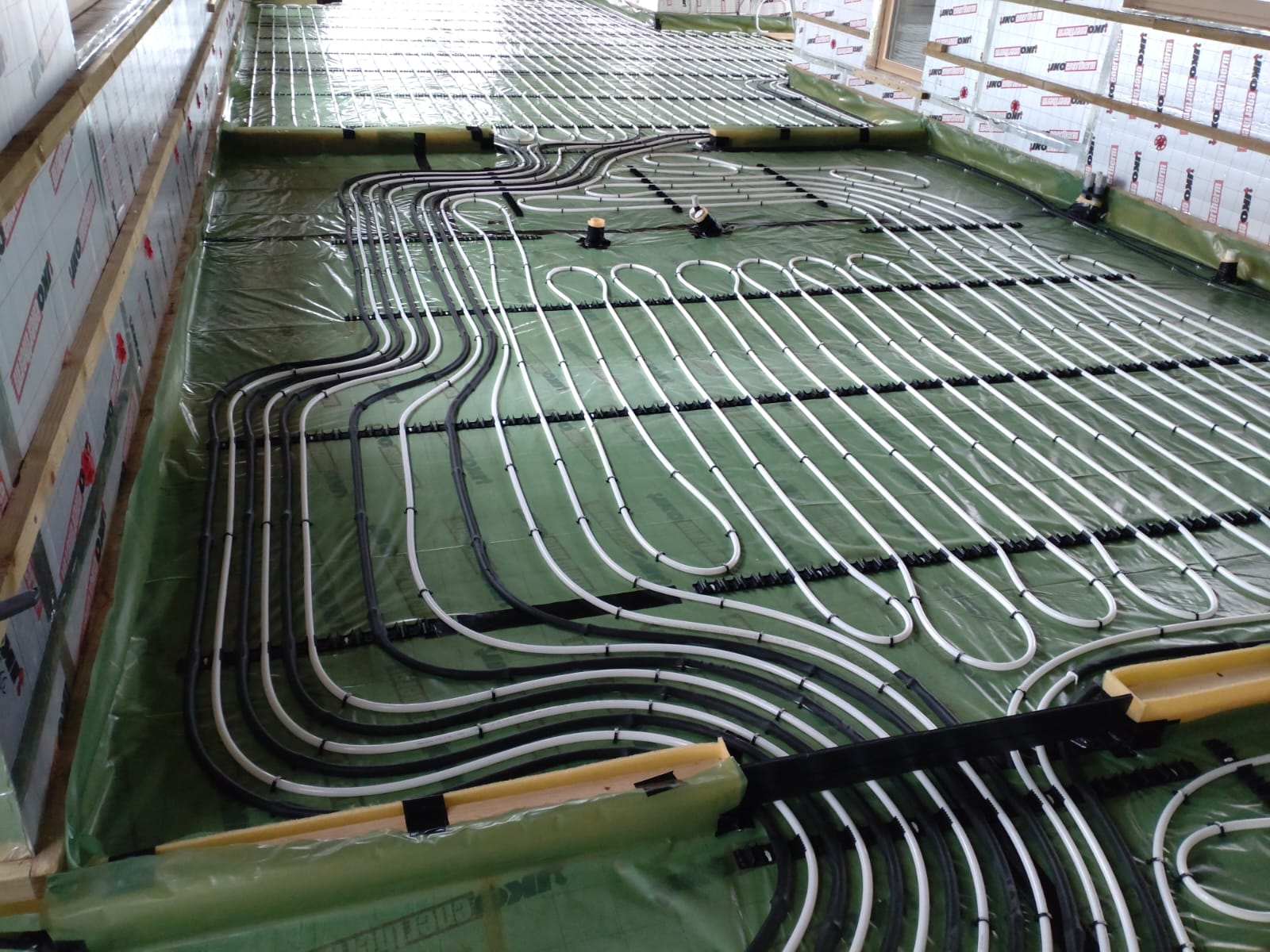
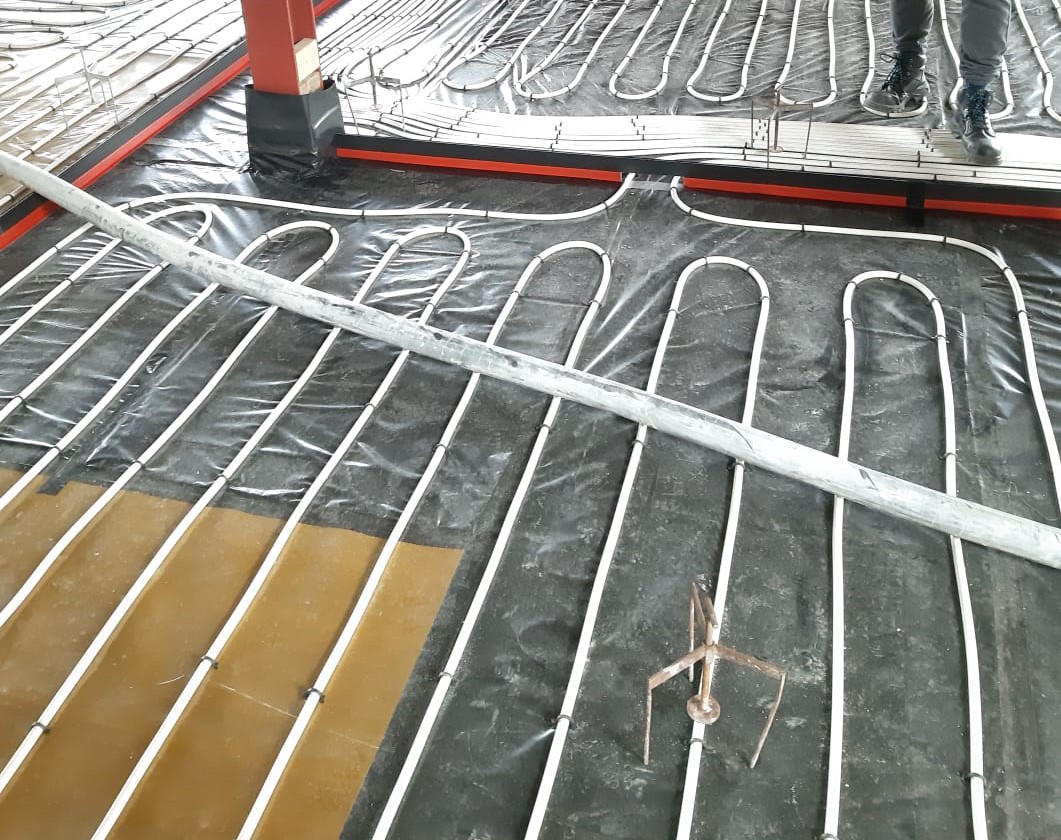
Where underfloor heating is installed, the system must be laid on top of the separating membrane. Heating pipes or cables must be securely fixed using proprietary fixings, at a maximum of 300 mm centres, to prevent movement during screed installation.
Water-based underfloor heating systems must be filled prior to screed installation to reduce the risk of pipes floating when the liquid screed is poured.